
Gum Disease Treatment: Deep Cleaning, Surgery and Next Steps
Early problems may improve with professional cleaning and better home care. Deeper buildup may require a deep cleaning, while more serious problems can lead to gum surgery or care from a gum specialist. Knowing where you are on that path makes treatment easier to understand.
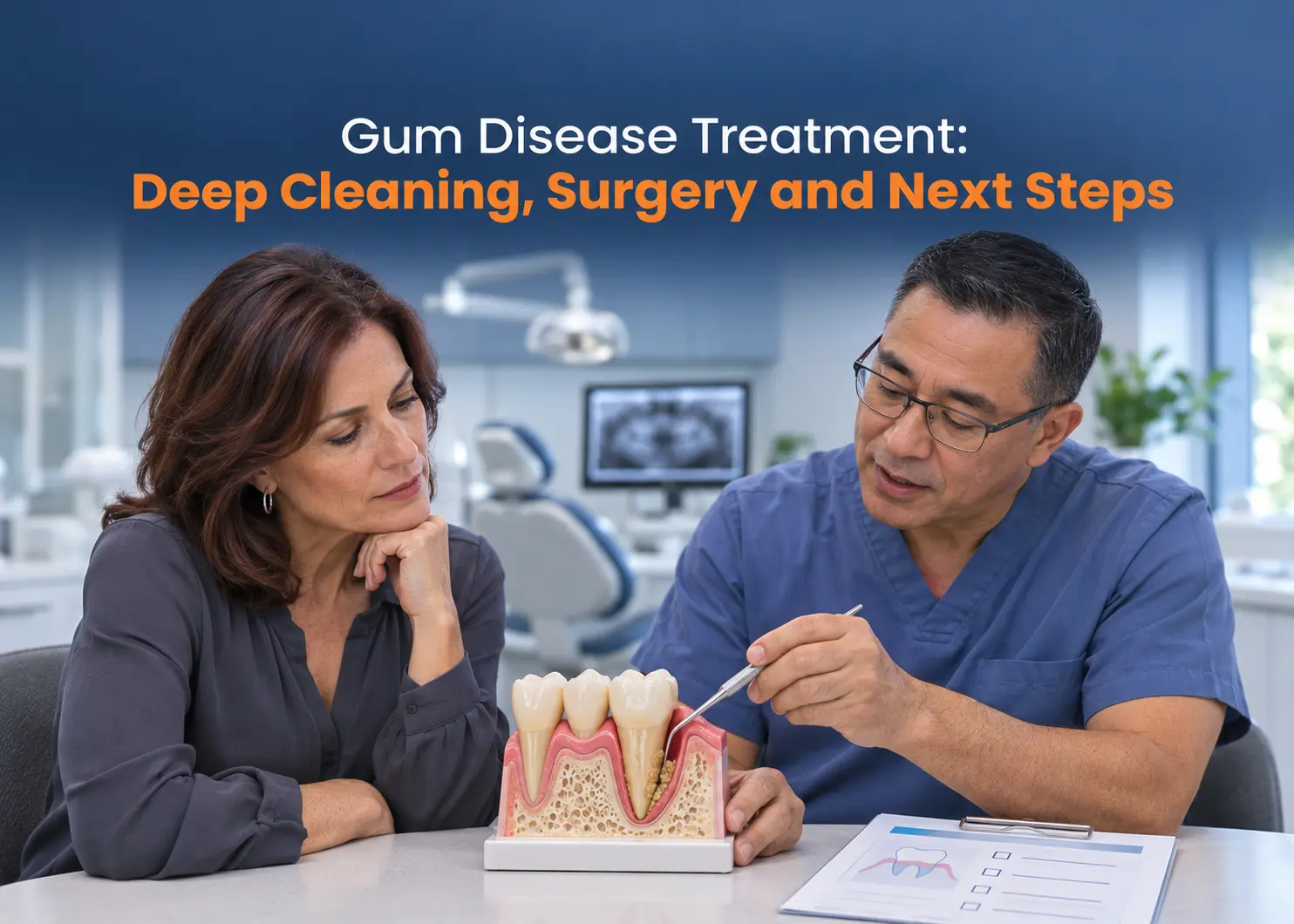
How Is Gum Disease Treatment Chosen?
A dentist does not choose treatment from one symptom alone. Bleeding can happen with early irritation, while receding gums, deeper spaces around teeth, loose teeth, or changes on dental X-rays may suggest a more serious problem.
For early gum irritation, common gingivitis treatments focus on removing buildup and improving brushing and cleaning between teeth. A professional teeth cleaning may be enough when buildup has not moved deeply below the gums.
When the problem extends farther down, care for unhealthy gums may need to go deeper. Dr. Feng can guide parents who notice ongoing gum bleeding in themselves or an older child by explaining what the exam shows and why simple cleaning or deeper care may be recommended.
When Is Deep Cleaning Needed for Gum Disease?
The mouth may be treated in sections, and numbing may be used for comfort. The National Institute of Dental and Craniofacial Research explains that deep cleaning may be used for gum disease, while advanced cases can require surgery.
Regular Cleaning Vs Deep Cleaning
Put simply, regular cleaning helps maintain healthier gums. Deep cleaning treats areas that routine cleaning cannot reach well.
What Affects Deep Cleaning Teeth Cost?
What Happens After a Deep Cleaning?
A deep cleaning is not automatically the end of treatment. If the gums respond well, the next step is often ongoing gum care and a cleaning schedule based on your needs. If some areas still trap buildup or stay inflamed, another treatment may be discussed.
When Might Gum Surgery Be Needed?
Surgery is not the next step for everyone. Usually, the buildup is treated first, the gums are allowed to heal, and the result is checked before a decision is made.
Can Receding Gums Be Treated?
Receding gums expose more of the tooth and sometimes the root. Treatment first focuses on controlling the cause and preventing further loss. Lost gum tissue does not simply grow back on its own.
When recession is significant, gum tissue repair may be considered to protect exposed areas. The right option depends on why the gums receded and how much tissue has been lost.
When Should You See a Gum Specialist?
If you are searching for a “periodontist near me,” do not choose only by distance. Ask why specialist care is needed, what treatment is being considered, and who will handle your follow-up care.
Healthy Gums Start With the Right Care
Take control of bleeding, swelling, and receding gums with personalized gum disease treatment.
How Can You Keep Your Gums Healthy After Treatment?
Brush twice a day with gentle pressure, clean between teeth every day, and follow the cleaning schedule recommended for your gums. Do not assume bleeding means you should stop cleaning the area. Ask your dental team how to clean it safely.
Dr. Feng can guide parents on simple brushing habits they can model at home so children learn to clean along the gumline without scrubbing too hard. Regular preventive dental care also helps spot renewed bleeding, buildup, or recession before it becomes harder to manage.
When Do Gum Problems Need More Treatment?
Do not judge severity from pain alone. If your gums bleed often, stay swollen, pull away from teeth, or your teeth feel loose, schedule an exam. A clear evaluation can show whether you need simple care, deeper cleaning, or a more advanced next step.
Why Choose Smile Scarsdale Family Dental?
At Smile Scarsdale Family Dental, gum care starts with understanding what is causing the problem and what level of treatment makes sense. Our team explains deep cleaning, follow-up care, and possible next steps clearly, helping patients make informed choices without feeling overwhelmed by unfamiliar dental terms or confusing treatment recommendations.