
Dental Implant After Orthodontic Treatment: What Comes Next?
Finishing braces is a major step, but a planned tooth replacement may still be needed to complete your smile. If you are considering a dental implant after orthodontic treatment, you may wonder how long to wait, how the gap stays open, and whether you will need another retainer. The next steps depend on the final space, your gums, jawbone support, age, and how well your teeth have settled.
Dental Implant After Orthodontic Treatment
A dental implant after braces is common when treatment has created the right space for a missing tooth. Your braces provider and dentist should confirm that the gap is wide enough, nearby teeth are positioned correctly, and your bite is balanced.
Why Should Braces Come Before Implants?
Braces or clear aligner treatment prepare a stable space for an implant. Natural teeth can move, while an implant remains fixed after placement.
Braces Create The Right Space
When a tooth has been missing since childhood, nearby teeth may lean or drift into the opening. Braces can reopen the gap and line up the neighboring teeth so the replacement has enough room and looks balanced.
Implants Stay In One Position
An implant cannot be shifted later like a natural tooth. Completing tooth movement first lets the dentist plan the replacement around the finished smile instead of asking the braces provider to work around a fixed implant.
What Happens After Braces Before A Dental Implant?
Tooth replacement after orthodontics follows a planned sequence. Knowing each stage helps you protect the gap and avoid delays.
Step 1: Confirm The Final Space
Your care team checks the gap, nearby teeth, and the way your upper and lower teeth meet. Images may show the tooth roots and available jawbone. Ask who will coordinate the plan and each appointment.
Step 2: Protect The Gap
A retainer stops nearby teeth from moving into the open space. For a visible gap, it may include a tooth-colored replacement. Wear it as instructed. If it becomes tight, loose, or painful, call the office instead of forcing it.
Step 3: Check The Support
Healthy gums and enough jawbone are needed to hold a single tooth dental implant. If the tooth has been missing for years, the area may have become thinner. In that situation, treatment that rebuilds support may be discussed before implant placement. This does not automatically mean an implant is impossible.
Step 4: Place The Implant
The dentist places the implant in the prepared space and lets it become stable before adding the visible tooth. The American Dental Association describes implants as a long-term option designed to blend with natural teeth. Healing varies, so follow your personal timeline.
Step 5: Add The New Tooth
Once the implant is ready, the final tooth is shaped and colored to match its neighbors. The dentist checks comfort, appearance, and chewing. Your old retainer may then be adjusted or replaced so it fits the completed smile without pressing on the implant.
How Long Should You Wait For A Dental Implant After Braces?
Some people can begin implant planning soon after braces, while others need a few weeks or months for the teeth to settle. A longer wait may be needed when the jawbone needs more support, the gums require care, or facial growth is not complete. Dr. Feng helps parents understand why a child or teenager with a missing adult tooth may need a temporary replacement until growth has finished.
Is A Single Tooth Dental Implant Right For You?
A single tooth dental implant may suit an adult with one missing tooth, healthy gums, enough jawbone, and a well-prepared gap. It stands on its own and does not rely on the neighboring teeth.
However, it is not the only option. Fixed tooth bridges may offer a faster route, while braces can sometimes close the gap. Compare appearance, time, cost, cleaning, nearby tooth health, and upkeep.
Real Patient Example: Dental Implant After Braces
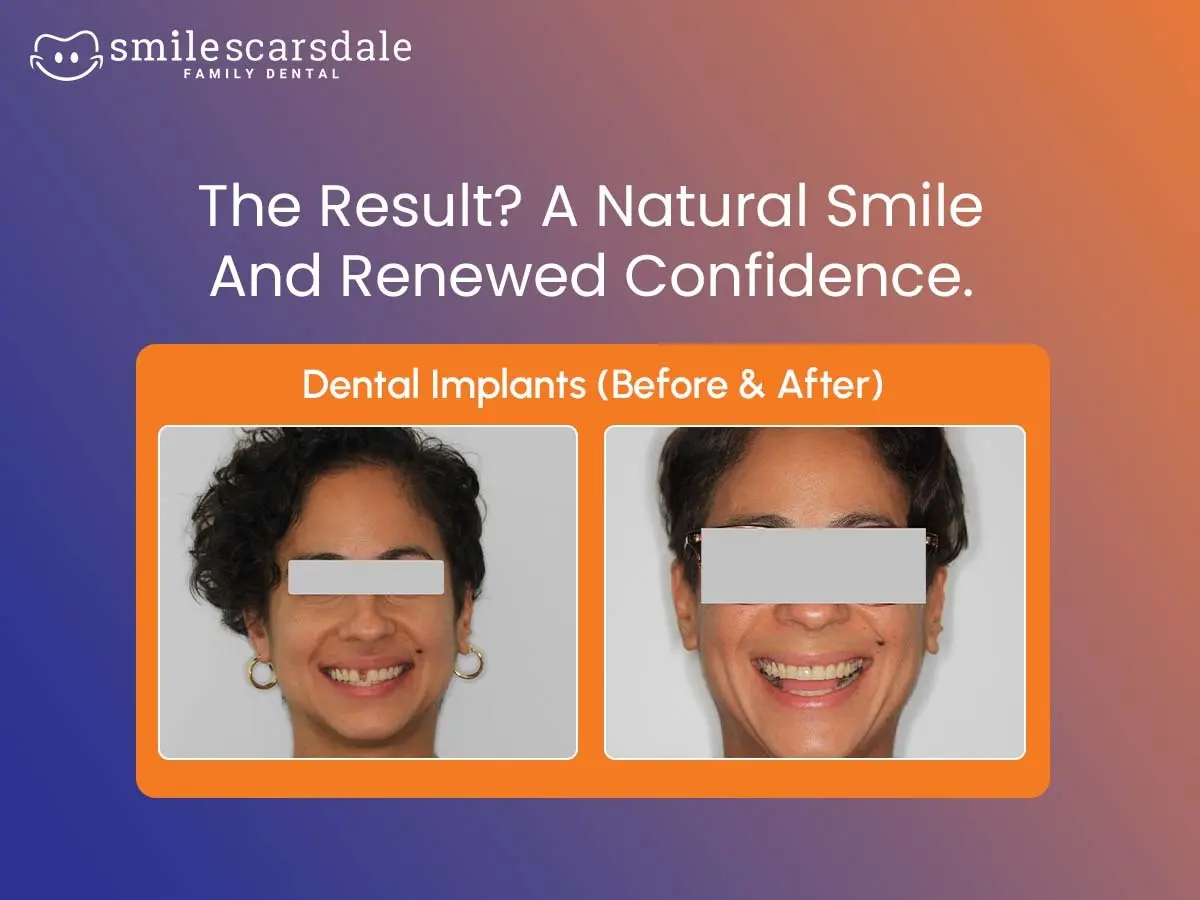
At Smile Scarsdale Family Dental, one patient had been missing a tooth since childhood. After orthodontic treatment created the needed space, the patient received an implant to complete her smile. Dr. Feng planned the final tooth to blend with its neighbors and helped the family understand each step.
This example shows how a Family Dentist in Scarsdale, NY can improve balance, chewing function, and confidence while maintaining a natural-looking result. A well-planned implant can restore more than the missing tooth. It can also help the completed smile look and feel more comfortable.
What Can Fill The Tooth Gap?
A clear retainer can hold a temporary tooth, or a small replacement may be attached near the gap. A front-tooth case needs more attention to appearance, while a missing back tooth may not need a visible temporary. Ask how each choice affects eating, cleaning, and retainer wear.
Which Implant Mistakes Cause Delays?
Do not stop wearing your retainer, let providers plan separately, or assume every implant follows the same timeline. Keep the gap clean and attend reviews. If you grind your teeth, ask whether bite protection belongs in your long-term plan.
Complete Your Smile After Braces:
How A Dental Implant Can Naturally Replace A Missing Tooth
Plan Your Missing Tooth Replacement
A well-planned dental implant after orthodontic treatment should protect the finished alignment while restoring appearance and chewing. Before booking, ask about the waiting period, retainer, temporary tooth, total visits, costs, and who will coordinate your care. Thoughtful restorative smile care can turn the final space into a complete, natural-looking result.
Why Choose Smile Scarsdale Family Dental?
At Smile Scarsdale Family Dental, Dr. Feng guides adults and parents through implant timing, gap protection, and final tooth design. Her team coordinates each stage with the finished smile in mind, helping patients understand their choices and receive a natural-looking replacement that supports comfortable chewing and renewed confidence every day.
Dental Implant FAQs
Can An Implant Be Placed Right After Braces?
Sometimes, but not automatically. Your dentist must confirm that the teeth have settled, the gap is correct, and the gums and jawbone can support the implant. Some patients move ahead quickly, while others need more time or preparation.
Do I Need A Retainer While Waiting?
Yes, most patients need a retainer to stop nearby teeth from moving into the implant space. A front-tooth retainer may also hold a temporary tooth. Wear it as directed and request a new fit if it becomes tight, loose, or painful.
Can I Get A Dental Implant With A Thin Jawbone?
A thin area does not always rule out an implant. Your dentist can measure the available support and discuss ways to strengthen it before placement. The extra step may extend the timeline but can create a safer base for the replacement tooth.
Will I Need A New Retainer After The Implant?
Possibly. The retainer used during the waiting period may not fit once the final tooth is attached. Your dentist may adjust it or make a new one that holds the natural teeth steady without pressing against the completed implant.
Is An Implant Better Than A Bridge?
An implant replaces one tooth without using neighboring teeth for support, while a bridge connects the replacement to nearby teeth. The better choice depends on jawbone support, tooth health, treatment time, cost, and personal goals.