
Dental Bonding vs Veneers: Cost, Lifespan and Best Use Guide
A chipped edge, small gap, uneven tooth, or stubborn stain can affect your smile. If you are comparing dental bonding vs veneers, the key question is which option fits the change you want, your budget, and your long-term expectations.
Bonding often suits smaller changes. Veneers can reshape several teeth. Here is how they compare on cost, lifespan, appearance, repairs, and best uses.
Dental Bonding vs Veneers: What Is the Difference?
Both are cosmetic dental treatments, but they work differently.
Dental Bonding
Bonding uses tooth-colored resin placed directly on the tooth, then shaped and polished. It can hide a small chip, close a narrow gap, or smooth an uneven edge. It is often completed in one visit and usually requires little or no removal of natural tooth material.
Dental Veneers
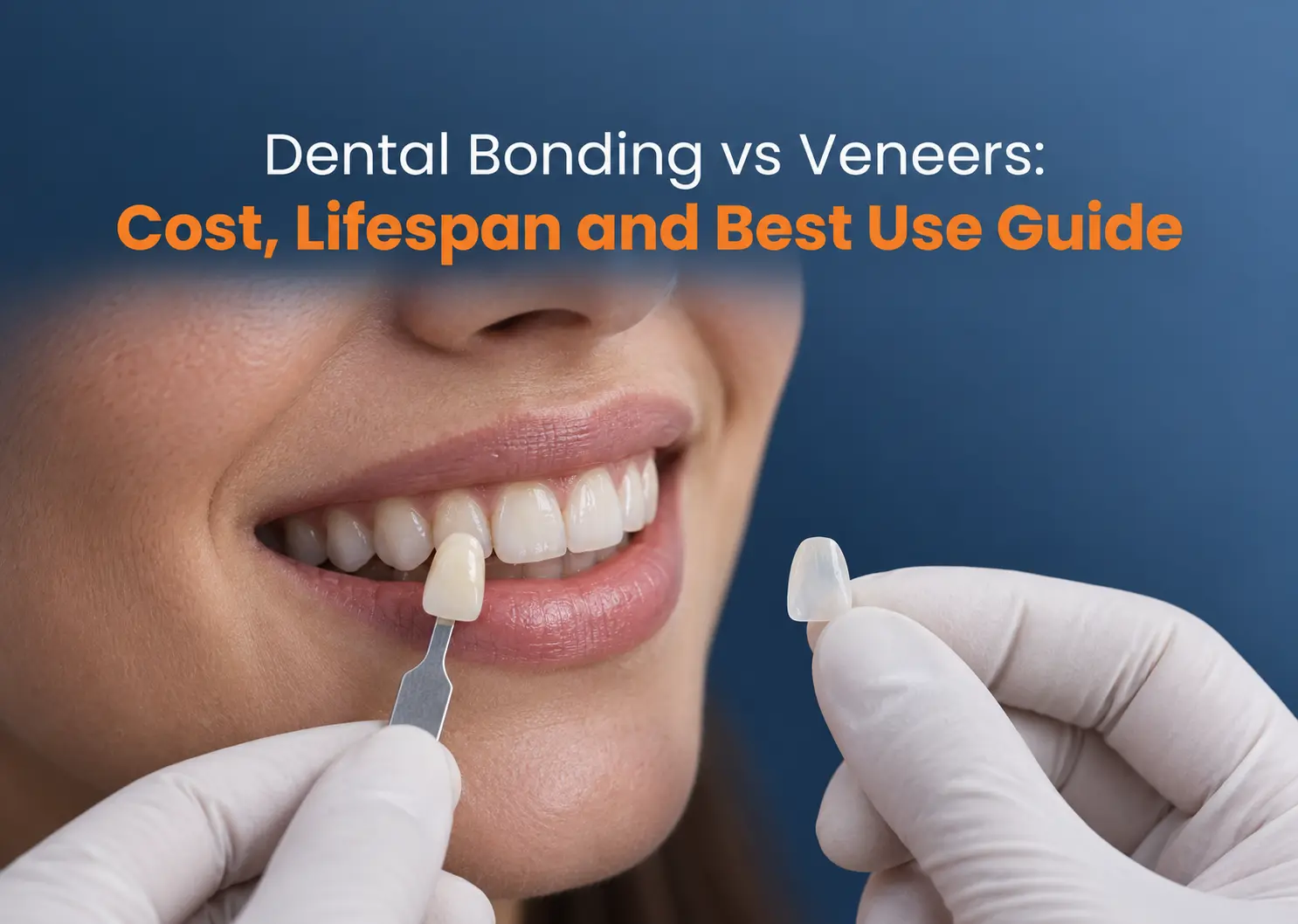
Veneers are thin coverings placed over the visible front of a tooth. They can change color, shape, size, and symmetry together. Custom dental veneers may fit better when several front teeth need a coordinated change instead of one small repair.
Dental Bonding vs Veneers Cost: Which Costs More?
Bonding usually has a lower upfront cost because resin is shaped directly on the tooth. Veneers generally cost more because they are custom-made and the process is more involved.
Still, dental veneers cost should not be judged by the first bill alone. Consider how many teeth need treatment, future bonding touch-ups, and possible veneer replacement. When comparing veneers cost, ask for the total plan, not only a per-tooth figure.
Bonding vs Veneers Lifespan: Which Lasts Longer?
Veneers generally last longer than bonding, although neither lasts forever. Cleveland Clinic says bonding often lasts about three to ten years before a touch-up or replacement may be needed.
Biting ice, chewing pens, nail biting, and grinding can damage cosmetic work. If grinding is a concern, custom protection for teeth grinding may help protect your result.
Bonding vs Veneers Appearance: Which Looks Better?
Appearance depends on what you are changing.
Bonding can blend naturally for one chipped corner or uneven edge. Veneers offer more control when several teeth need the same shade, shape, or size. Porcelain also resists stains better than composite resin.
If color is the main concern, ask whether professional smile whitening could solve it first. Whitening before bonding can also establish the shade before resin is matched.
Bonding or Veneers: Which Fixes What?
Small Chips and Uneven Edges
Bonding often works well for a small chip because only the missing area may need rebuilding. For a child or teen with a chipped front tooth, Dr. Shili Feng can help parents understand whether a simple repair is appropriate now or whether a cosmetic change should wait.
Gaps Between Teeth
A small gap may sometimes be closed by adding bonding to nearby teeth. Larger spaces or gaps caused by tooth position may be better addressed with clear aligner treatment rather than simply making the teeth wider.
Stained or Discolored Teeth
Whitening may be the simplest first option when teeth are healthy but darker than desired. Bonding can cover a small stubborn area, while veneers may suit broader color changes that do not respond well to whitening.
Several Teeth Needing a Smile Change
Veneers can make sense when several front teeth need changes in color, shape, length, or balance together. This is often why people searching for a smile makeover near me compare veneers with bonding.
Dental Bonding vs Veneers: How Much Tooth Change Is Needed?
Bonding usually preserves more natural teeth because little or no enamel needs removal. Traditional porcelain veneers commonly require some enamel removal so they can sit naturally.
The American Dental Association explains that veneers are not reversible because enamel is removed. When parents ask about veneers for an older teen, Dr. Feng can explain why preserving natural teeth matters and whether a less permanent option should be considered first.
Considering Dental Bonding or Veneers?
Book your cosmetic consultation in Scarsdale today
Bonding or Veneer Chips: What Happens Next?
Bonding can often be touched up by adding and reshaping material. A chipped or loose veneer may need repair, rebonding, or replacement. The ADA notes that veneers can chip, crack, wear down, or loosen over time.
People who grind their teeth, play contact sports, or bite hard objects should ask how those habits may affect either choice.
Dental Bonding vs Veneers: Which Should You Choose?
Bonding may suit you if you want to correct one or two small concerns, prefer a lower upfront cost, want faster treatment, or want to preserve more natural tooth.
Veneers may suit you if several front teeth need coordinated changes, you want stronger stain resistance, or you want a longer-lasting cosmetic result.
A cosmetic dentist should also check whether whitening, aligners, or another option can reach your goal with less treatment.
Cosmetic Dentist Questions: What Should You Ask?
Ask these questions before deciding:
- How many teeth actually need treatment?
- Which option keeps a more natural tooth?
- What repairs may be needed later?
- Should I whiten first?
- Will grinding affect the result?
- Would moving my teeth improve the result first?
If you are searching for composite bonding near me, ask to see examples of similar cases and how future repairs would be handled.
Choosing Bonding or Veneers for Your Smile
Bonding suits many smaller, quicker changes, while veneers can create a broader change across several front teeth. The right choice depends on what you want to fix, how many teeth are involved, your budget, and the maintenance you are comfortable with.
Why Choose Smile Scarsdale Family Dental?
Smile Scarsdale Family Dental, offers care for patients considering cosmetic changes. Dr. Shili Feng explains suitable options, expected upkeep, and how much natural tooth each choice may affect. Parents can also discuss age-appropriate concerns for children and teens before deciding whether treatment should happen now or later for their families.
FREQUENTLY ASKED QUESTIONS
Is Bonding Cheaper Than Veneers?
Bonding usually costs less upfront because resin is shaped directly on the tooth and often needs one visit. Veneers generally cost more, but long-term repair and replacement needs should also be included when comparing total cost.